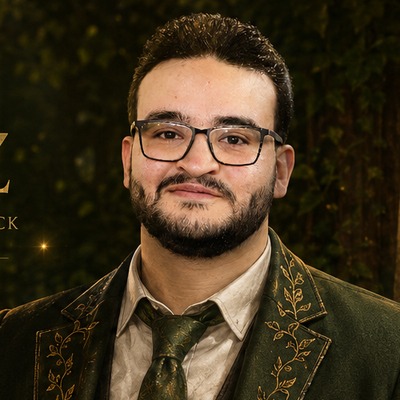
Android & Kotlin Multiplatform engineer with backend and system-design depth, and a full-stack freelancer shipping real products for real businesses. Welcome to my house in the woods; scroll through the rooms.
Scroll
How I work
A generalist, on purpose.
I'm a software engineer drawn to the whole lifecycle: requirements, architecture, implementation, deployment, and the unglamorous work of keeping things running. That pull is what keeps me picking up new tools and technologies, and it's deliberate, not restless. Breadth doesn't dilute depth, it compounds it.
Knowing how the mobile app, the backend, the build pipeline, and the product fit together makes me sharper inside my own specialty, and it means I can contribute across teams, not just within mine. I go deep where it counts, stay curious everywhere else, and I know my craft cold.
The front yard
Shipped & out in the world
The things you can walk up and look at: products I've built or helped build that are live and in people's hands.
Deputy lead on a mobile team. I made the case for Kotlin Multiplatform across our products, built the foundation it runs on, and now lead the mobile side of a new AI-powered product.
A year designing event-driven microservices: authentication, role-based access, and the architecture decisions behind them, including a deep evaluation of real-time stacks.
I've been a gamer my entire life, long before I was a developer, and it's what got me into computer science in the first place. Now I'm finally building them myself, deep in a hands-on Unity and C# program covering real-time systems and gameplay from the ground up, purely because I love it.
Unity · C# · real-time · gameplay · performance
The hearth
Let's build something.
From Hebron, currently based in Ramallah, available locally in both. Open to onsite roles across the EU & Middle East, and remote internationally, with relocation in 4–6 weeks.
B.Sc. Computer Science, Birzeit University · Arabic (native), English (C1) · References available on request.
Room I · Case study
Betting the mobile stack on Kotlin Multiplatform
I made the technical case for KMP across the company's products, then built the foundation it runs on.
Context
I'm deputy lead on a four-engineer mobile team, co-leading technical strategy and sprint planning. The team had deep Jetpack Compose expertise, but our products were Android-only, and the business needed a path to iOS without doubling the team or maintaining two parallel codebases.
The case I made
I proposed adopting Kotlin Multiplatform and Compose Multiplatform as the company's mobile strategy: reuse the team's existing Compose skills to keep the transition cheap, share business logic, networking and persistence across platforms, and open the door to iOS. I took the argument to the mobile lead first, then presented it to the CTO and leadership.
What I built
Once it was greenlit, I built the core infrastructure of Omailo, our first Kotlin Multiplatform product, a mailing application:
A Ktor Client networking layer, with Room and DataStore persistence, wired through a modular Koin dependency-injection setup.
Reusable SDK modules for the whole mobile portfolio: Firebase (FCM, Crashlytics, Analytics), SSO authentication, and user-profile management.
The offline-first data layer, plus a rich-text editing experience built by bridging a JavaScript editor in a WebView to the KMP layer.
I also contributed to a WebView-based Android product, since discontinued as a business decision: I built its Retrofit networking layer from scratch inside a custom MVP architecture, and resolved deep bugs in the WebView, Jetpack Compose, and Dagger 2 interop layer.
Onfinity: the current build
Right now I lead the mobile, Kotlin Multiplatform side of Onfinity, an AI-powered link-in-bio product now in testing. Most of my work is native mobile engineering: refactoring the AI-generated web experience into a proper native mobile experience, handling UI/UX design, fixing bugs, and implementing new features. Alongside that, I analyze requirements and communicate the mobile side's needs with the backend, product, and design teams.
Leading the team
I mentored two mid-level engineers onto Android and Kotlin Multiplatform through pair programming, architecture sessions, and code review. I also built out CI/CD with Jenkins and Fastlane in a Dockerized build environment, deploying automatically to Firebase App Distribution.
Outcome
Kotlin Multiplatform is now the company's official mobile strategy, not just a trial. Omailo is in active development and has already reached staging, where it's used for shareholder testing and demos. Onfinity is in its testing phase, working through the rough edges in its AI-generated flows, with an internal release to shareholders expected in about a month. The shared SDK modules were built for reuse across the mobile portfolio; nothing beyond Omailo and Onfinity has adopted them yet, but they're ready for the next product that needs them.
The two engineers I mentored are now comfortable across Android and Kotlin Multiplatform, and own and build their own features end to end.
The CI/CD pipeline ended a recurring source of QA confusion: every build now goes out automatically through Firebase App Distribution, signed and consistent, so QA always tests the right version.
Shipped, public (Android work at Harri): Harri Live · TeamLive · TeamHub. Across the Harri hospitality Android apps, I contributed multi-tenant scheduling, an anonymous-user privacy feature, and a legacy date/time-picker refactor with cross-day shift support.
Room II · Case study
Designing services that hold up
A year of backend and system-design work, building the services, and making the architecture calls behind them.
Event-driven architecture
I designed an event-driven microservices architecture for a point-of-sale platform using TypeScript, Express, PostgreSQL and AWS SQS/SNS, for decoupled, scalable communication between services. I built the User and Authentication services with role-based access control, and core parts of the client and shop-management services exposing REST APIs consumed by mobile and web clients.
Ownership and system design
I acted as Product Owner for an ERP-extension workstream for two to three months, leading one developer to deliver custom workflows on top of ERPNext (Frappe), owning requirements, prioritization and delivery. I also authored a 60+ page architectural evaluation for a Chat-as-a-Service platform, surveying real-time protocols, message-queue systems, databases, and language/framework tradeoffs to guide technology selection.
Outcome
Two of the services I designed, Authentication and Shop Management, are live in production, handling login and shop-management flows for the platform. The Chat-as-a-Service evaluation was shelved after a change in leadership, before a technology was chosen.
Freelance is where I'm full-stack: client side, admin panel, and the backend behind both, owned end to end.
FlashStore.ps
A full-stack web platform I built with AI-assisted development (Claude Code), with an admin panel and a single client experience serving three pricing tiers: VIP resellers, resellers, and normal retail clients, differentiated by tier-based pricing and admin settings like referral commission. I owned the whole thing: data model, backend, both front ends, and deployment.
M&B
In development: an Arabic-first, RTL e-commerce platform supporting both Arabic and English, for a Palestinian retail & wholesale business, serving both retail clients and wholesale sellers, with its own admin panel. Built on Next.js with a deployment pipeline of its own, and designed as a configurable codebase rather than a one-off.
How I approach it
Solo full-stack work is where the generalist instinct pays off most: I take something from requirements through architecture, implementation and deployment, and I'm still the one keeping it running afterward.
Outcome
FlashStore.ps is now used by many phone and computer stores locally as their main digital products supplier. In its initial three months, it generated over 40,000 ILS in revenue.
M&B will cut the manual paperwork salesmen currently handle by moving reseller orders into the system. It will also take the business online for the first time, past its physical store and social media, with a dedicated website for browsing and buying.
Live: FlashStore.ps · M&B, an Arabic retail/wholesale store (in development).
Room IV · Case study
A run at game development
In progress, and proof that I still love learning something completely new.
What it is
I'm currently part-way through a hands-on game-development program with Unity and C#, which I expect to finish in early 2027. It covers real-time game loops, state management, gameplay systems, and the discipline of hitting a performance budget every frame.
Why it's in this house
I've been a gamer my entire life, long before I was an engineer, and it's what got me into computer science in the first place. This is the itch I never got to scratch professionally, and it's not about padding a resume. Real-time systems, state management, and performance discipline show up everywhere in software, not just games, but that's not why I'm doing this. I'm doing it because I love games, and I want to know how they're made.
Outcome
The real outcome I'm after here is the learning itself: being a beginner again, and picking up real-time systems and gameplay engineering from scratch. When the program wraps, the plan is to ship something playable to Google Play, Steam, and itch.io. That's when this room earns a demo.
Unity · C# · real-time systems · gameplay · state management · performance